



 EN
·
EN
·  DE
DE
Case study · 3D Ring-Core
Measured, not just modelled. With PRIMES.
PRIMES invited us into their application lab to characterise the 3D Ring-Core Shaper at high power, using their new Ring-Beam analysis. On single- and multi-mode fiber lasers up to 3 kW, the measured profiles came out in excellent agreement with design and theory.
The measurement setup: fiber coupler → 2″ ring-core shaper → lens → MSM+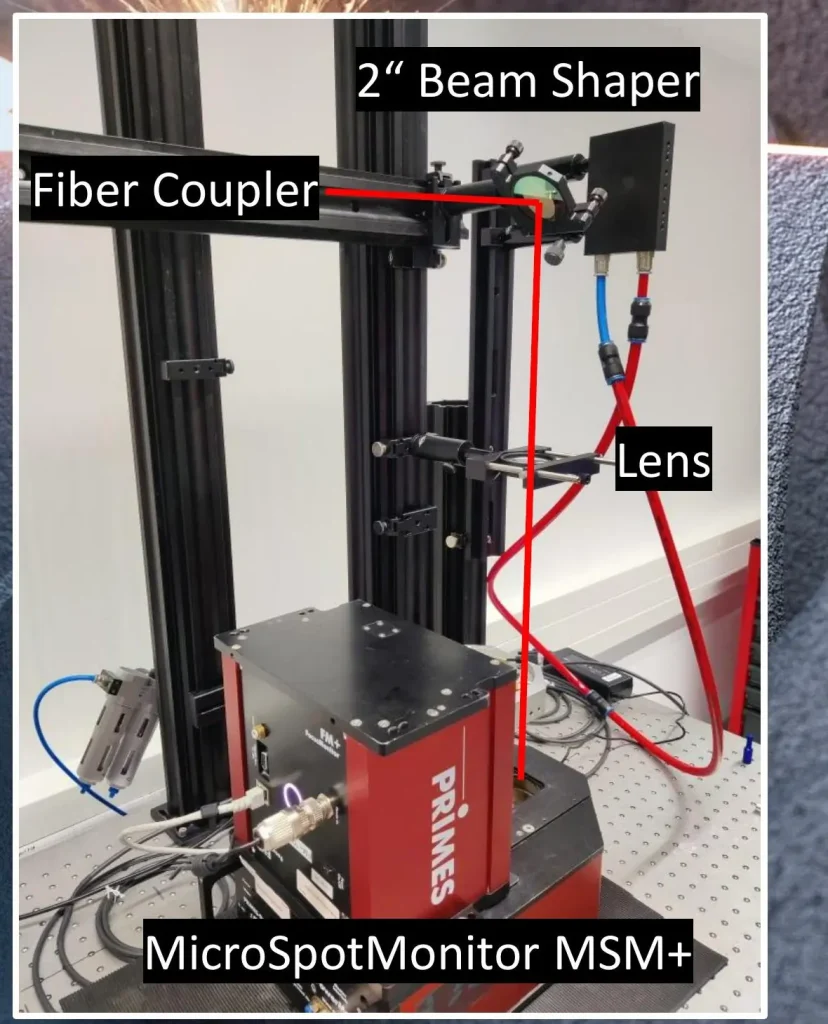
The setup
- Fiber-coupled beam through a 2″ ring-core shaper and a focusing lens (f = 200 mm)
- Focused onto the PRIMES MSM+ to map the profile right at the focal plane
- Single mode: 115 W · 1070 nm · M² 1.04 · spot ≈ 35 µm
- Multi mode: 3 kW · 1070 nm · M² 18 · spot ≈ 338 µm
Two purpose-made reflective shapers (one for single mode, one for multi mode) each characterised in its fiber-laser regime with the same instrument.
Setup & conditions:
measurements performed with the PRIMES MSM+ and the new Ring-Beam plugin on single- and multi-mode systems up to 3 kW.
Investigations at the focal plane
Beam profile, right at focus
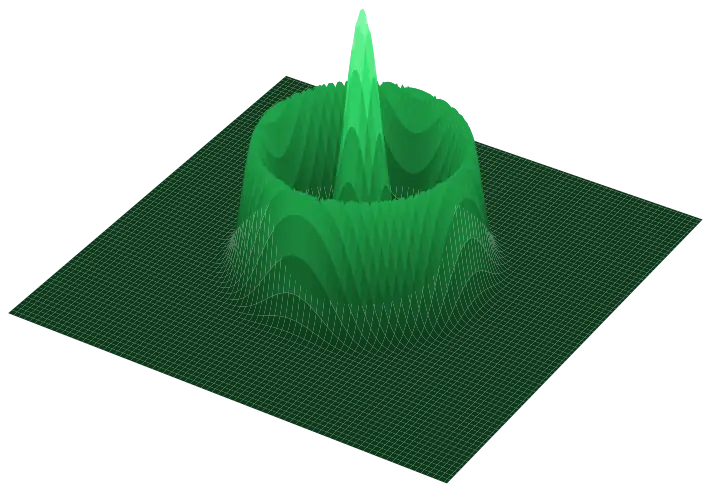
Both the single- and multi-mode profile came out in excellent agreement with design and theory: a clean ring around the smallest possible core.
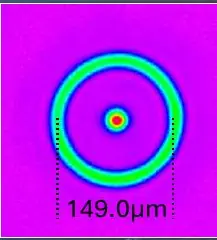
115 W single mode · 1070 nm · M² 1.04 · f 200 mm
Core diameter
34.7 µm
Ring diameter
149.0 µm
Ring width
26.6 µm
Ring homogeneity
19% peak-valley
Core–ring decentering
1.6 µm
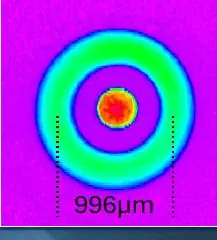
3 kW multi mode · 1070 nm · M² 18 · f 200 mm
Core diameter
331 µm
Ring diameter
996 µm
Ring width
265 µm
Ring homogeneity
18% peak-valley
Efficiency
90% 75.6 ring · 14.4 core
Conditions: values are for the two configurations above and depend on wavelength, input beam, M², optical layout and application.
And across the whole depth-of-field
- PRIMES then mapped the beam caustic: profiles from +zR through focus (z0) to −zR, in both single and multi mode
- The measured profiles match the simulated x–z cut: the ring-and-core shape holds its form the whole way through
- Stable propagation over the entire depth-of-field: the physical reason the process stays calm and robust against thermal lensing
A ring-core that keeps its shape across the full depth-of-field, measured in both mode regimes, not just at a single plane.
Setup & conditions:
beam-caustic analysis on the PRIMES MSM+, single- and multi-mode systems up to 3 kW; simulation shown alongside measurement.
Simulated x–z cut beside measured profiles across the depth-of-field (single and multi mode, zR to −zR)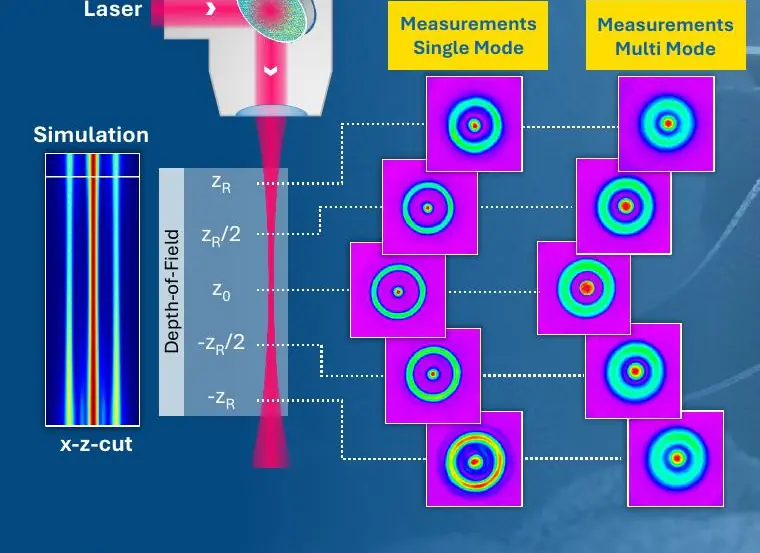
Related
Product & applications in this case
Want the numbers for your setup?
Tell us your laser and application. We’ll confirm the ring-core profile for your exact configuration, measured, not guessed.
Discuss your challenge