




 EN
·
EN
·  DE
DE
Use case · 3D Ring-Core
Faster build-up for additive, with user-exchangeable beam shaping.
Aconity3D lets its customers retrofit existing machines with Midel beam shaping through a simple, user-exchangeable carrier in the beam path. That opens up the latest advances in beam shaping (ring-core profiles today, and the ones that follow), with no laser redesign and no realignment needed. The payoff: higher build-up rates and more control over the melt pool. It keeps Aconity systems ready for the frontier of metal 3D printing.
In partnership with

Challenge
- Beam shaping used to mean complex, hard-to-integrate optics
- Fixed energy distribution: hard to adapt to different materials
- Changing the profile meant reworking and realigning the optical setup
Result
- Ring-core shaping with no measurable power loss (up to 1 kW)
- Shaper integrated in a user-exchangeable carrier
- Operators switch beam profiles at the machine in minutes
- Reproducible intensity profile across repeated insertions/removals
Beam shaping as easy as using a standard optic: plug & play, no fine alignment, and adaptable to the material at hand.
Setup & conditions:
industrial additive manufacturing with Aconity3D; shaper in a user-exchangeable carrier, ring-core shaping up to 1 kW.
3D Ring-Core shaper integrated in an Aconity3D LPBF system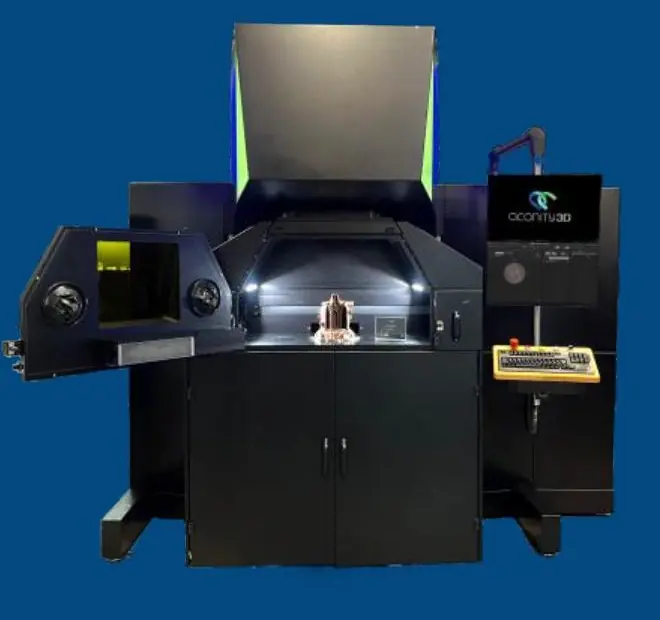
The shaper carrier in the beam path, above the scanner module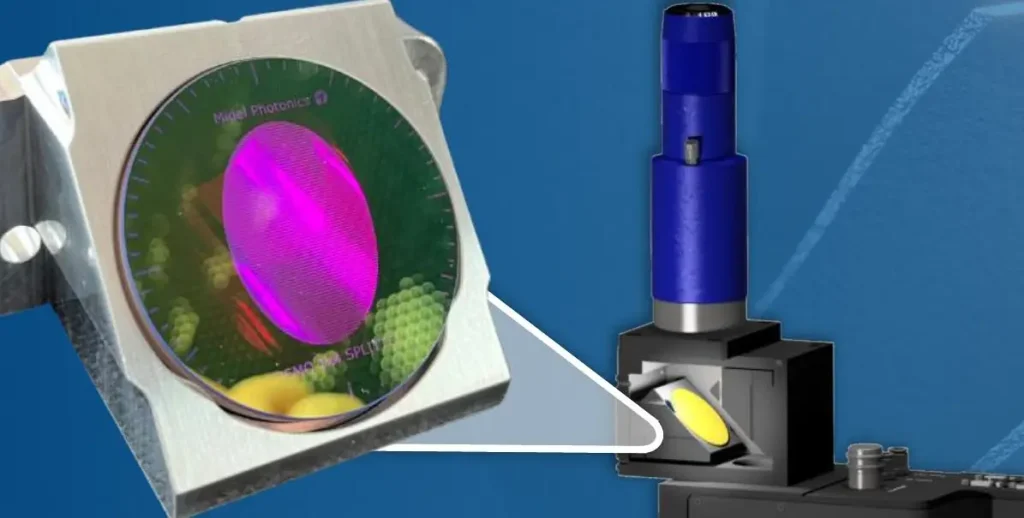
Drops in between collimator and scanner
- Sits in the free beam path between the collimator and the optical scanner unit
- Loosen four screws, slide the carrier in, tighten. That’s the whole install
- Alignment-free: the passive optic needs no adjustment on the machine
- Retrofits an existing system: no dual-mode or programmable-beam laser needed
A passive, exchangeable optic, so a standard machine gains ring-core beam shaping without a redesign of the optical train.
Setup & conditions:
carrier mounted in the beam path of an Aconity3D LPBF system, between collimator and scanner.
Why it matters on the build plate
- Higher throughput — a stable ring-core spot holds its shape through the depth of focus, lifting overall productivity
- Fast adaptability — swap the carrier to adapt the energy distribution to a specific material
- Maximum precision — a controlled melt pool improves feature resolution and surface finish
Adapt the energy distribution to the material: for throughput, feature resolution and surface finish, with plug & play integration.
Note:
throughput, resolution and surface-finish benefits are qualitative process advantages of ring-core shaping.
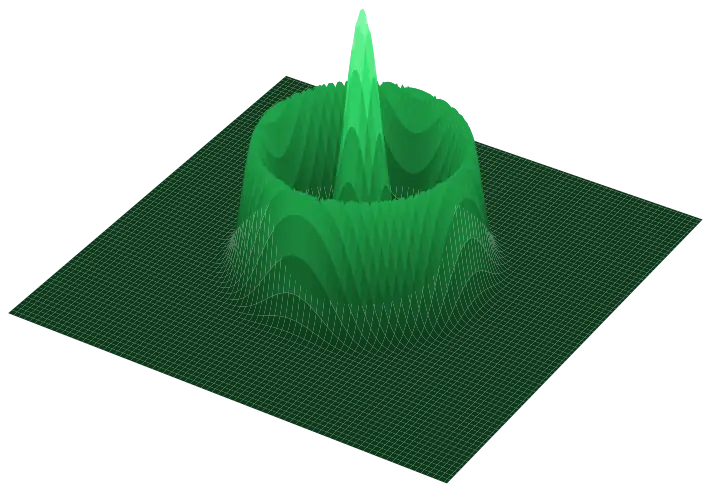
Measured ring-core intensity profile, taken after 5 min, without any alignment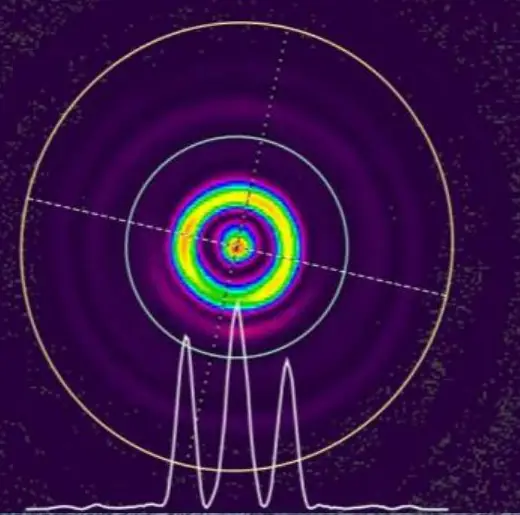
Related
Product & applications in this case
Have a similar additive challenge?
Tell us your laser and application. We’ll assess feasibility and start your first project together.
Discuss your challenge