



 EN
·
EN
·  DE
DELife Sciences & Aesthetics
As diagnostic and aesthetic devices move from one scanned spot toward whole fields of light addressed at once, the beam’s shape stops being a detail and becomes the specification. Across that field, how evenly the light lands decides image quality, treatment repeatability and how the same device performs unit after unit. That’s the optics we build.
When the field grew, the beam profile became the spec
For a long time the delivery path did the job. A corrected lens train, a multimode fibre, a scanned single spot, a diffuser ahead of the source: these were the building blocks a generation of diagnostic and aesthetic systems got built on, robust and inexpensive, and well understood by every engineer who specified them. And for good reason: when the field is small a centre-weighted profile is close enough to flat across it, and when a single spot is scanned the motion averages out much of what the profile gets wrong. It was the right answer to the field sizes and demands of the time.
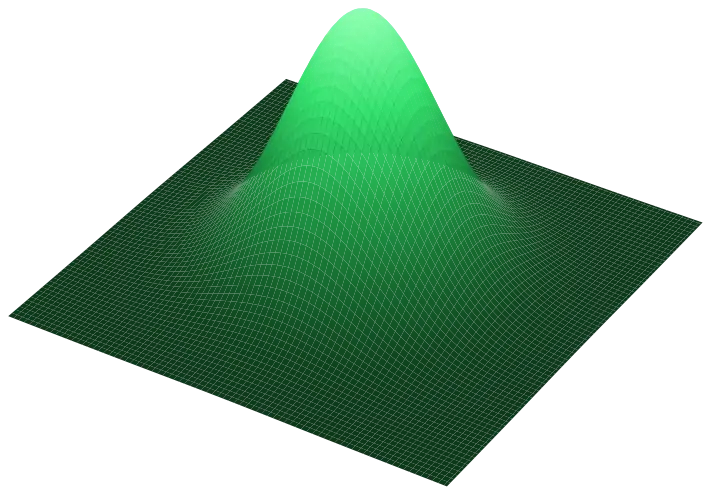
What changed is the size of the field and what’s asked of the light inside it. Treatment went fractional (one pulse spread across dozens or hundreds of points), and there it’s fluence uniformity across the whole field, not peak fluence, that binds. Quantitative imaging followed the same path: over a large field an uneven excitation profile doesn’t just look uneven, it biases the number that comes out, so two identical targets read as different values depending on where they sit. A Gaussian that falls off toward the edges quietly turns field size into measurement error and treatment variability, and the more the field grows, the more the beam’s own shape sets the ceiling on the device.
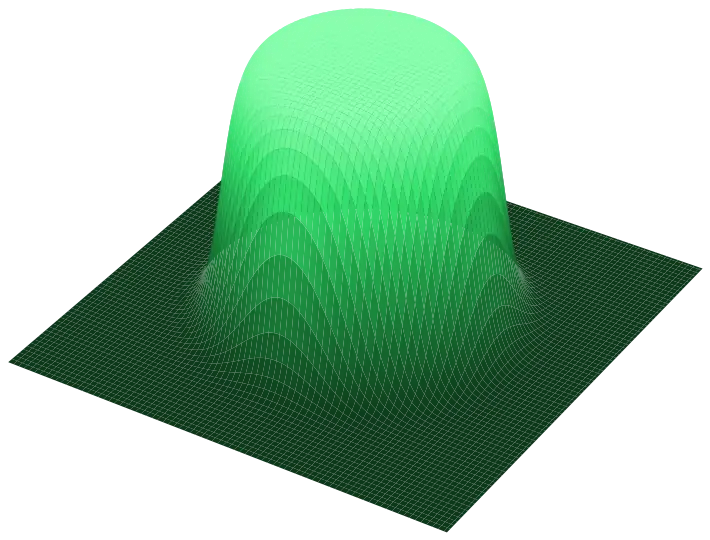
The tempting fix is to add (another element in the train, an active modulator, a software correction), but each addition is a part number, a tolerance and a service item, and correction can’t restore what the optics never delivered. The other direction takes complexity out: a passive shaped or split beam leaves the delivery head already in the shape the process needs, and because the shaping happens on a reflective surface it carries from DUV to NIR without a change of material. That’s what we build: flat-top homogenizers and multispot splitters that hold the same conditions everywhere in the field, engineered around your wavelength and power, identical from unit 1 to unit 1,000.
- Uniformity is the measurement — across a large field a non-uniform profile degrades image quality and biases quantitative data, not just its appearance
- Hotspots land where they shouldn't — a peaked profile puts peak intensity on sensitive tissue or cells the design never intended to overdrive
- Add-ons cost more than they return — every extra element or correction step is BOM, alignment and service burden; a passive shaped beam takes complexity out instead
Consistent, controlled, repeatable, by design
Consistent illumination, not guesswork
Diagnostic imaging depends on even light across the whole field of view: a flat-top beam gives every point the same illumination, so what the sensor sees reflects the sample, not the source.
Controlled, even energy on tissue
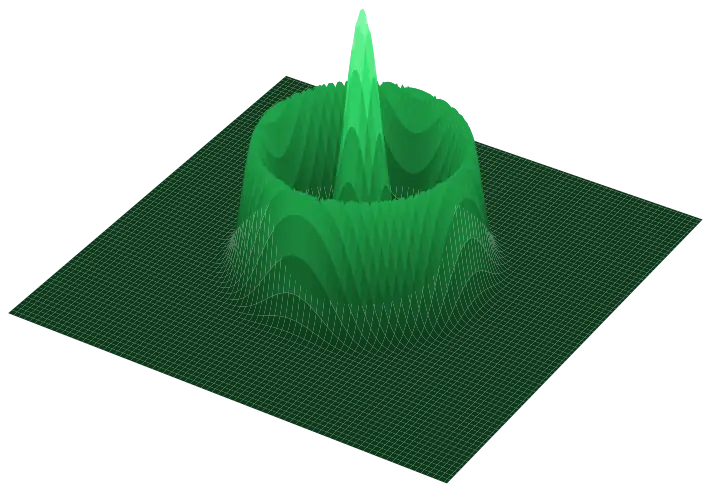
Turning a peaky or multimode beam into a uniform plateau removes the peak-intensity spikes that drive unpredictable thermal response, supporting steadier, more controlled interaction.
One beam, many identical points
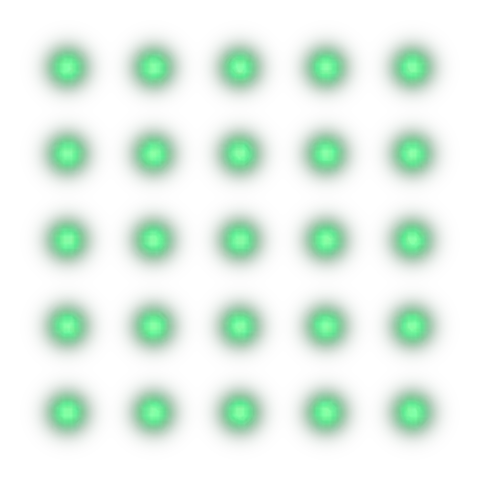
Fractional and array-based approaches need many spots that behave the same way: splitting one beam into a grid of identical sub-beams addresses many points in parallel, without stacking up laser sources.
The life science & aesthetic device landscape, and where beam shape is the lever
Life science and aesthetic devices span a wide range of laser-based systems, but they share one question: how closely does every point in the field match every other? Below is the landscape as we see it, and for a growing number of these we help customers find and build the beam shape that fits.
Ablative & fractional systems
Remove or modify material in a controlled pattern: as one larger spot, or as an array of many small ones. Fractional architectures split a single pulse across dozens to hundreds of discrete points, which shifts the governing spec from peak fluence to how closely every point in the array matches every other.
Non-ablative & photobiomodulation systems
Deliver light over an area or volume without removing material. Delivered radiant exposure is irradiance × exposure time, so the illumination profile sets it directly: the ratio between the brightest and dimmest point of the field is the spread in delivered energy across it.
Diagnostic & imaging illumination
Widefield, microscopy and sensor-based systems in which the measurement is derived from intensity. Non-uniform illumination doesn’t only look uneven: two identical objects read as different values depending on where they sit in the field. That is why uniformity is specified in the optics rather than left to be corrected afterwards.
Flow cytometry & cell analysis
Instruments that interrogate cells one at a time as they cross a focused beam. A flat-top along the interrogation axis means a cell’s signal doesn’t depend on precisely where in the beam it crossed, which shows up directly in the spread of the measured population.
Cell & tissue engineering tools
Optogenetic stimulation, light-based bioprinting and cell-handling instruments, where the light pattern is the tool itself. These systems need many points that behave identically, or a projected field that responds the same way edge to centre, at whatever wavelength the photochemistry requires.
We design the optics for these systems. We don’t make clinical or efficacy claims about the devices themselves; those sit with the device manufacturer and its regulatory process.
Uniform illumination, parallel treatment points
Beam Homogenizers
Turns a multimode fiber-laser beam into a uniform flat-top — the workhorse for hardening, welding and cladding.
Explore → Parallel processingMultispot Splitter
Divides one beam into many identical sub-beams under 5% variation, to parallelize drilling and cutting.
Explore →Send us your wavelength, beam parameters and target profile. The fit-check on each product page shows what we need to run a feasibility check.
Building a diagnostic, aesthetic or biotech laser device?
Give us your wavelength, beam parameters and target profile, and we’ll engineer a passive, drop-in mirror optic that shapes your beam exactly the way your process needs it, delivered in days.
Discuss your challenge