



 EN
·
EN
·  DE
DEMicromachining & Precision Structuring
As features shrink, the demands climb. With today’s ns, ps and fs lasers, intensity is rarely the limit. The next step in surface quality, feature precision, scrap avoidance and throughput runs through the beam’s shape. That’s what we build.
In micro machining, the tolerances only get tighter
Micromachining keeps asking for more: smaller features, cleaner edges, tighter tolerances, on harder and more delicate materials. And with the rise of ns, ps and fs lasers, raw intensity is rarely what’s missing: a modern ultrashort-pulse source puts far more of it on the part than the process can usefully absorb. The question has shifted from how much energy to how it’s distributed across the spot and along the focus. This is why the future of these processes is bound up with the beam’s shape, not its power.
The beam shape affects everything that matters at once. Surface and feature quality suffer first: a Gaussian’s hot centre and soft wings write taper, recast and rounded edges that a flat, controlled profile simply doesn’t. Scrap avoidance follows the same logic. On curved, deep or genuinely 3D parts, the focus drifts out of a shrinking depth of window, and an out-of-focus feature is a rejected part. Throughput takes the same hit: run a Gaussian efficiently and you overdrive its centre while the wings do little, so a shaped profile does more useful work per pulse. The hard part is meeting all of these and being robust enough for series production: day after day, part after part, without a control loop for the laser focus.
Concretely, that’s drilling with straight walls instead of taper, structuring with pulse-to-pulse fluence uniform enough to repeat, deep ablation whose floor stays flat as it sinks away from focus, and thin-film removal that clears the layer without touching what’s beneath. Each is a shape problem before it’s a power problem. That’s where our 3D line-up comes in: beam profiles engineered per process, dimensioned to your feature geometry, and built on optics with extremely high damage thresholds so they hold up under the full intensity a modern source delivers.
- Surface & feature quality — taper, recast and edge rounding are set by the intensity profile; a flat, controlled beam removes the gradient a Gaussian bakes in
- Scrap avoidance & throughput — hold the shape over depth and the focus stops drifting parts into scrap, while a shaped profile puts more of each pulse to useful work
- Built for series production — process-matched beam dimensions on optics with extremely high LIDTs, so the shape holds up under full ns/ps/fs intensity, part after part
Hold the spec, not just the design
Extended depth of focus
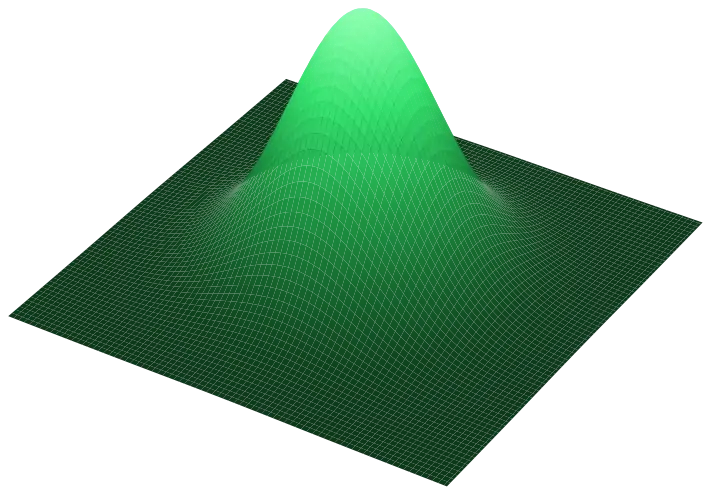
3D Gaussian holds a near-Gaussian single peak over 2–5× the depth of a standard focus, so you stop chasing focus on non-flat or deep 3D parts.
A flat, homogenized profile
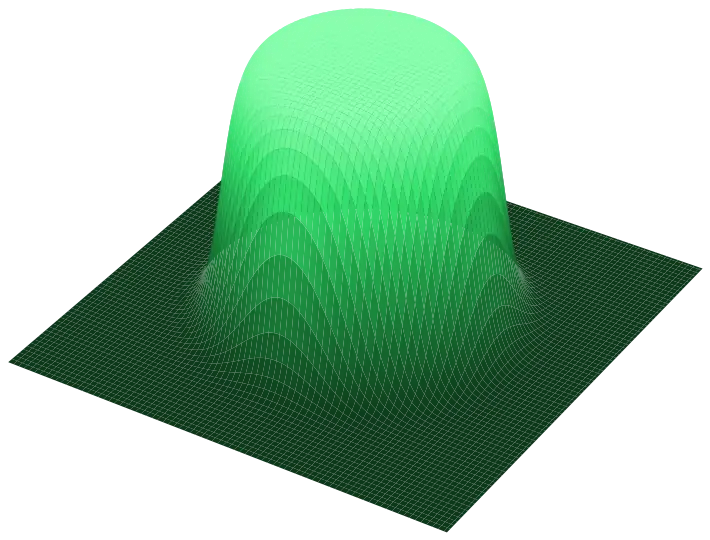
3D Top-Hat replaces the peaked centre with a uniform plateau for flatter floors and cleaner walls, and holds that shape across ~60% more working depth.
No new failure point
Reshaping doesn’t cost peak-fluence headroom: damage-threshold tested per ISO 21254-2, unaltered by the microstructuring, from 266 nm DUV to NIR, fs-pulsed to CW.
The laser micromachining landscape: where beam shape is the lever
Laser micromachining spans a wide range of processes, but they share one underlying question: does the beam hold its shape through the depth and geometry of the feature you’re actually making? Below is the landscape as we see it, and for a growing number of these we help customers find and build the beam shape that fits.
Percussion drilling
The focus stays fixed on one spot, pulse after pulse: fastest per hole, and the most exposed to focus error, since nothing averages it out.
Trepanning drilling
A start hole is enlarged by moving the focus along a circular path: diameter is set by the trajectory, but wall angle is still set by the beam.
Helical drilling
The focus spirals down through the material for the straightest walls and least taper, at the price of many more passes per hole.
Laser scribing
Overlapping pulses form a controlled line to initiate separation in glass, silicon or brittle substrates: depth consistency along the line decides whether the break follows it.
Laser structuring & texturing
Patterned ablation across an area creates functional texture for grip, wetting, adhesion or optical effect, where uniform pulse-to-pulse fluence, not peak fluence, sets the result.
Field & block ablation
Layer-wise removal over an area or volume for cavities and 3D features: the floor moves away from the focus with every layer, which is exactly where depth-of-focus stability pays.
Thin-film & selective layer removal
Removing a coating or film without touching what’s underneath: the process window is a fluence band, and a flat profile is what keeps the whole spot inside it.
Beam profiles for micromachining
3D Top-Hat Beam Shapers
Holds a uniform flat-top across the depth of focus, not just in the focal plane.
Explore → EDOF · focus extension3D Gaussian Focal Shaper
Extends depth of focus up to 5×, so the process stops depending on a knife-edge focus.
Explore → Designed around your beam3D Custom
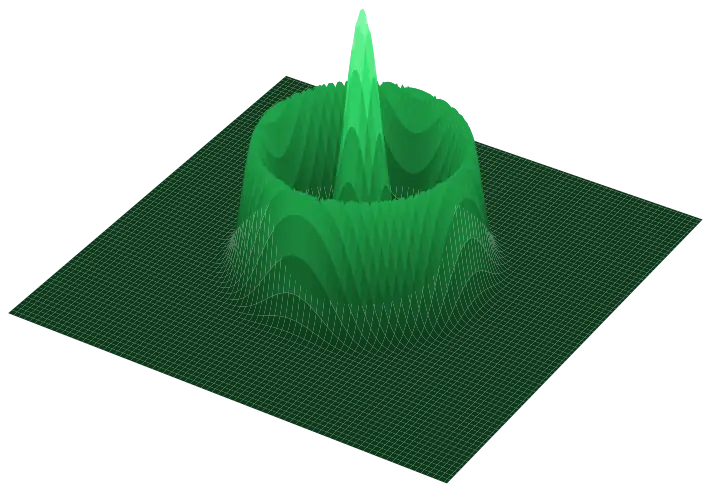
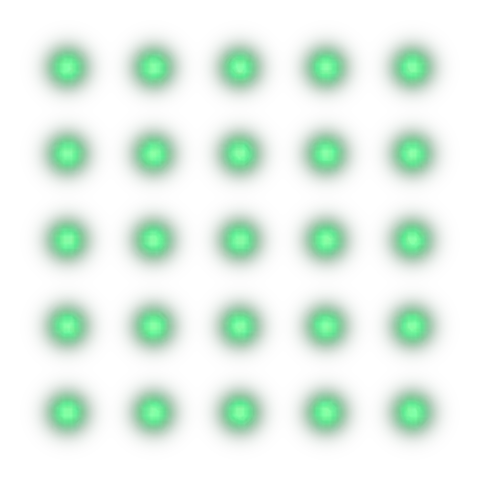
When none of the profiles above is the right answer, we design the distribution around your process.
Explore →Not sure which fits? The fit-check on each product page shows the parameters we design against.
Related use cases
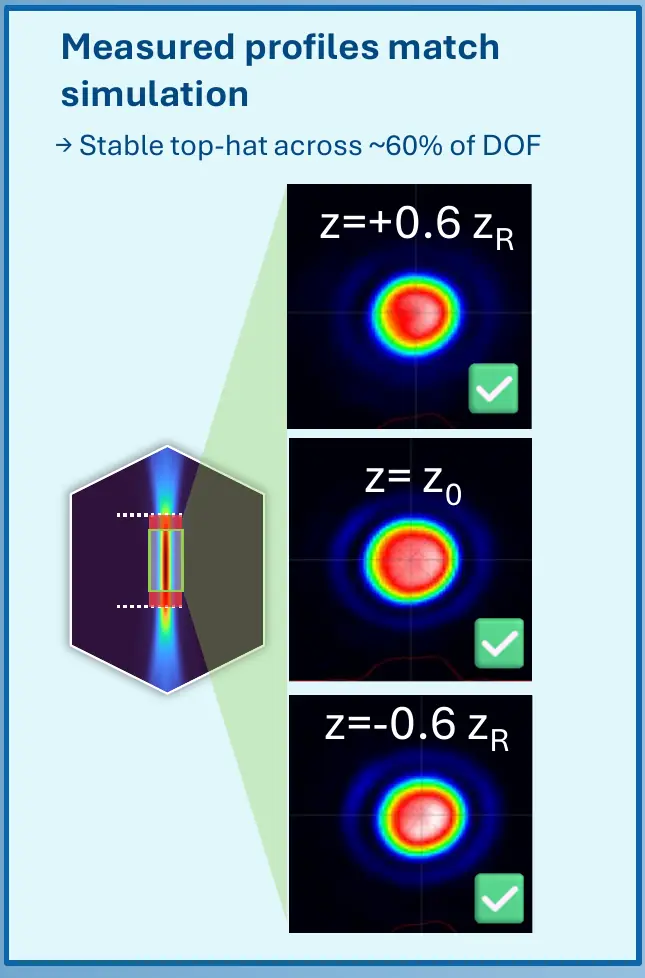
Precision micro-machining
Flatter floors and cleaner walls than a Gaussian, verified against simulation.
Read use case →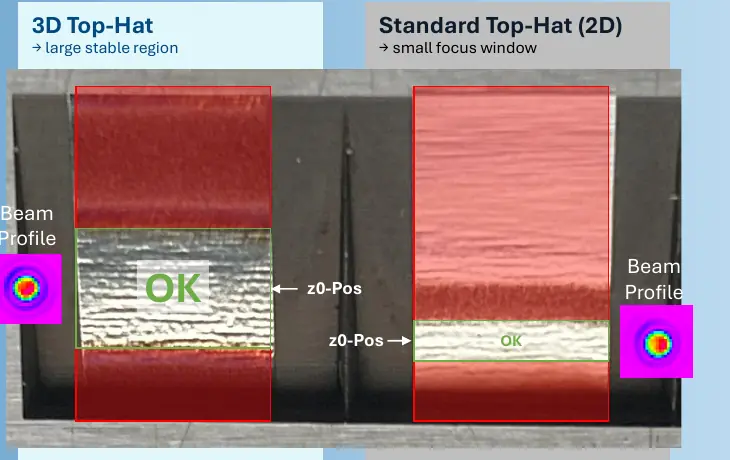
Engraving on a tilted surface
>3× larger process window and >2× better finish across an 8° tilt.
Read use case →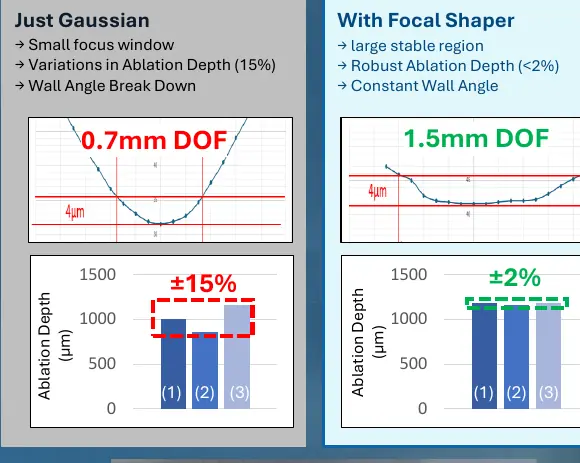
Deep 3D ablation in hard metal
7× more stable ablation depth and constant wall angle — no focus tracking.
Read use case →Stop compensating for your beam. Reshape it instead.
If your process head is fighting focus drift, taper, or edge quality, tell us your laser and part geometry. Most retrofits are a single-mirror swap, done in under 30 minutes.
Discuss your challenge