



 EN
·
EN
·  DE
DE
Use case · 3D Top-Hat
Predictable ablation with flatter floors and cleaner walls.
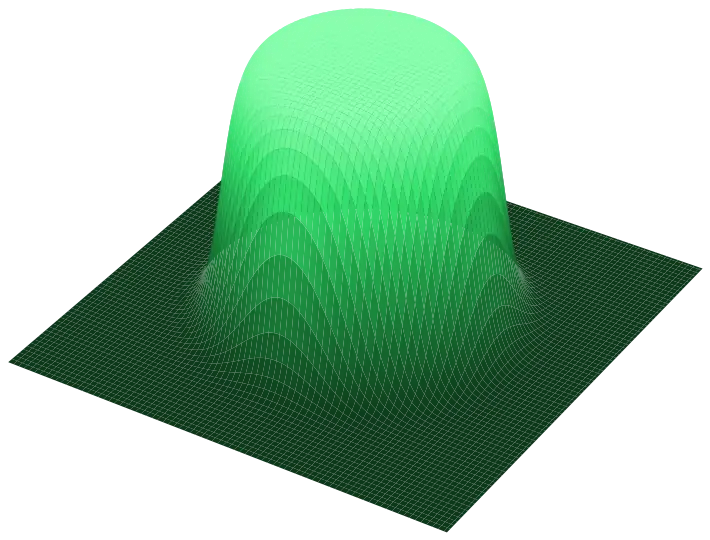
Ultrafast precision micro-machining on a scanner system, realised with an industry partner. Measured beam profiles match simulation and stay top-hat across ~60% of the depth of focus, so ablation runs at a controlled fluence over the full spot.
Setup
- GFH GL.compact, F65 mm scanner system
- Light Conversion Carbide 40W, 290 fs pulses, up to 50 µJ
- Spot-Ø 12–18 µm, small-feature ultrafast machining
Result
- Measured beam profile matches simulation
- Stable top-hat over ~60% of the depth of focus
- Predictable beam behaviour → basis for reliable micro-machining processes
When the beam behaves as designed through depth, the process is predictable: the same recipe holds across refocus and part-to-part variation.
Setup & conditions:
GFH GL.compact scanner, F65 mm, 40 W carbide, 290 fs, up to 50 µJ, spot-Ø 12–18 µm; measured with an industry partner.
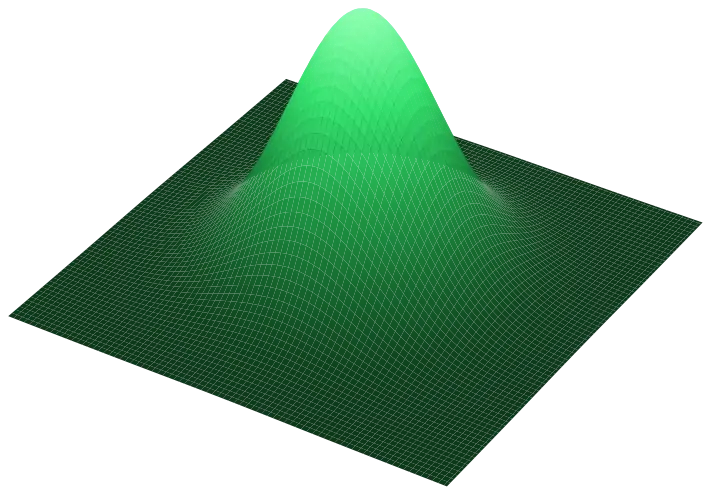
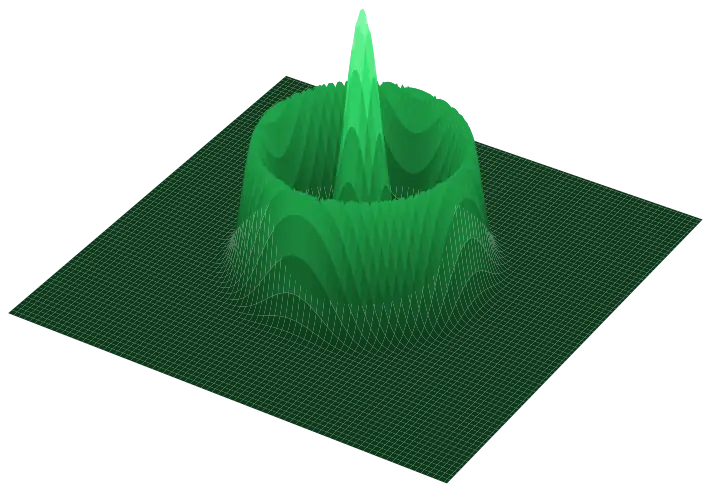
Measured profiles match simulation: stable top-hat at +0.6 zR, focus and −0.6 zR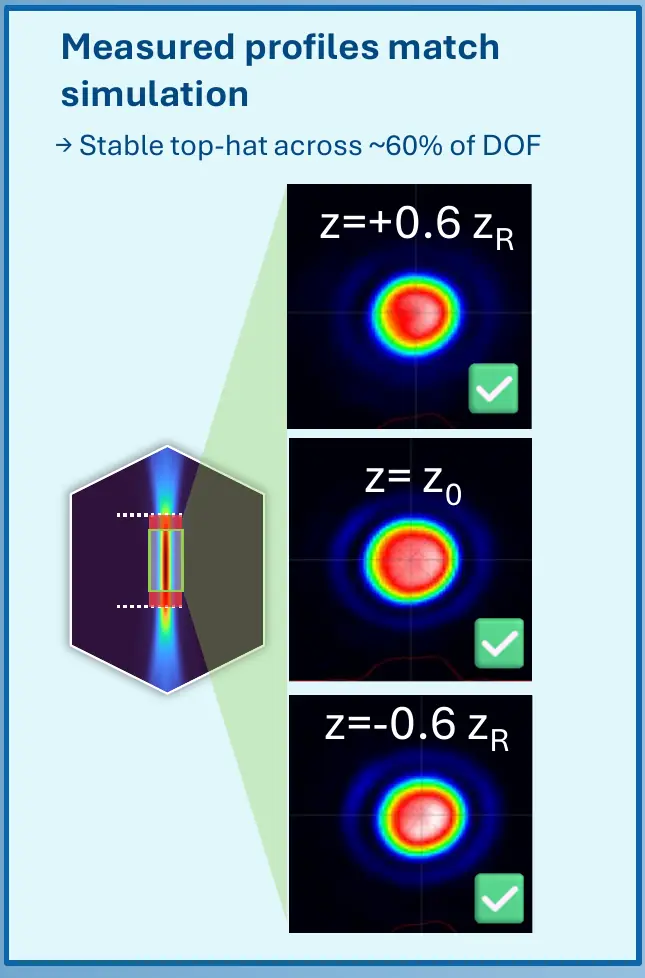
Ablation cross-sections, 3D Top-Hat vs. Gaussian: flatter bottom profile and a steeper, less-tapered wall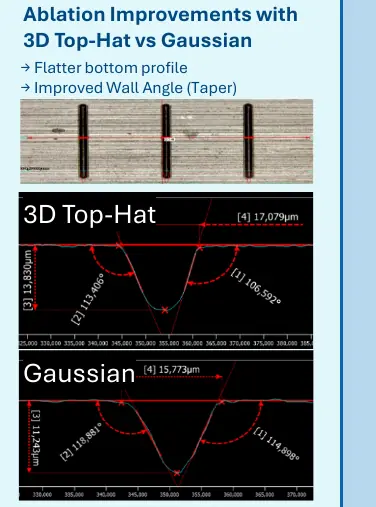
Why the cut is better, not just more stable
- Flatter bottom profile — uniform fluence removes the Gaussian’s peaked centre, so the ablation floor is even
- Improved wall angle (less taper) — steeper side walls for higher aspect-ratio features
- Predictable, repeatable ablation — controlled fluence over the full spot, through the depth of focus
A uniform flat-top through depth means the cut itself improves: flatter floors and steeper walls than a Gaussian, a reliable basis for micro-machining.
Note:
flatter-floor and wall-angle (taper) improvements are measured against a Gaussian in this configuration.
Related
Product & further use cases
Have a similar micro-machining challenge?
Tell us about your laser and application, and we’ll assess feasibility and get your first project started.
Discuss your challenge