



 EN
·
EN
·  DE
DEWelding & Cutting
In welding and cutting, the beam shape decides how much process margin you have. As parts get harder and powers climb, a single Gaussian peak runs into melt-pool instability and thermal drift. The fix usually isn’t a new laser, it’s a passive optic that reshapes the beam you already have.
Where a Gaussian beam reaches its limits
The Gaussian spot earned its place. It puts nearly all of the laser’s power into one bright peak, still the most efficient way anyone has found to drive a deep, narrow keyhole, and it hands process engineers a beam with essentially two knobs, power and feed rate, plus years of hard-won intuition for how to turn them. But as parts get harder and powers climb, that single peak keeps running into the same two walls. The first is melt-pool control: a lone hot centre opens a capillary that readily necks, collapses and erupts, and the spatter and porosity that follow are the beam shape’s doing, not the operator’s. The second shows up at ever-higher powers, where thermal drift moves the focus, and the process window with it, so a recipe that held this morning no longer holds this afternoon.
That points to two levers. Extending the depth of focus makes the process tolerant of part-height variation and thermal drift. Changing the shape of the beam attacks melt-pool stability directly. Ring-core profiles (a hot core to open the keyhole, a cooler ring to keep it open) have demonstrated exactly that: wider gap bridging, calmer keyholes, less spatter, and a process window broad enough to weld across a range of gaps without re-tuning. The catch is how you get one. A ring-core laser delivers it beautifully but costs far more than the single-mode and multimode sources already on the floor, so it earns its keep in R&D and stalls at volume production, where converting a line is real money, even though production typically runs one optimised ring-to-core ratio and never touches it again. We deliver that same fixed, optimised profile as a passive retrofit: dropped onto the laser you already own, far cheaper than a new source, and more depth-stable than a ring-core laser through focus.
- Melt-pool control — a single hot peak opens a capillary that necks, collapses and erupts; the spatter and porosity that follow are set by the beam’s shape, not by the operator.
- Thermal drift at high power — as average power climbs, focus and process window drift with it, so a recipe that held earlier stops holding — a shorter, more stable focus is what buys that back.
- Ring-core advantages without a ring-core laser — wider gap bridging, calmer keyholes and less spatter, delivered as a passive optic on your existing single-mode or multimode source instead of a far costlier new laser.
Shape the energy, control the result
Depth of focus that survives real parts
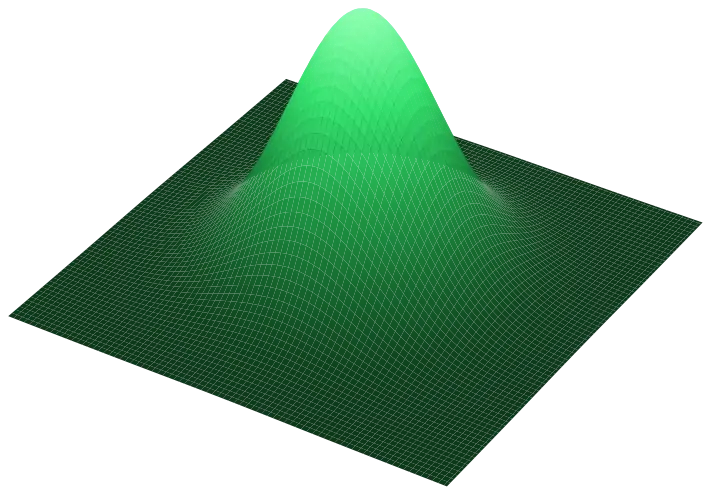
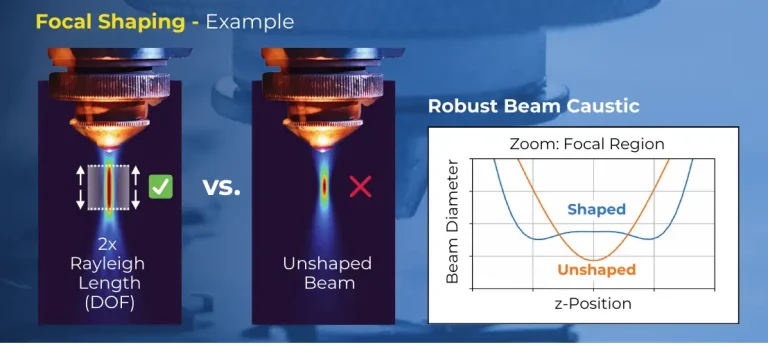
3D Gaussian elongates the Rayleigh length by 2–5× while keeping a single-peak, near-Gaussian profile: ±0.5 mm height tolerances stop being a defect source.
A ring that keeps the keyhole calm
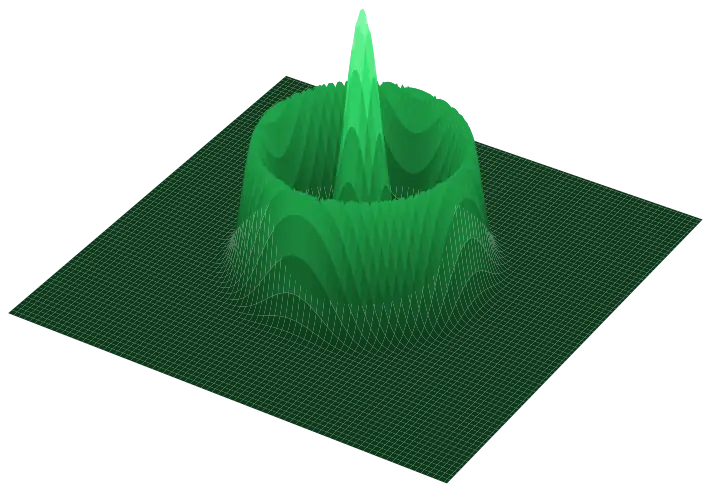
3D Ring-Core wraps a hot core in a cooler ring (the profile that widens gap bridging and quiets spatter) and holds that geometry stable across virtually the full depth of focus, independently confirmed up to 3 kW multimode. Ring-core behaviour without a ring-core laser.
Uniform energy from an uneven beam
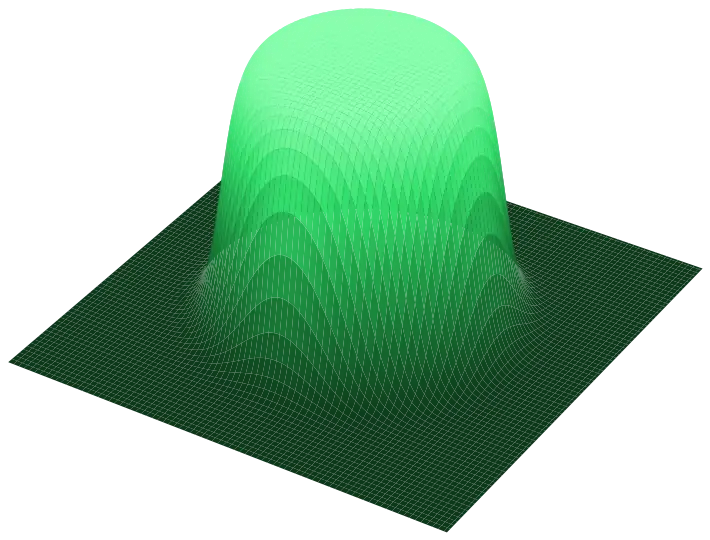
Beam Homogenizer turns a multimode fiber laser’s irregular spot into a clean flat-top, round, square or rectangular, with no fine-alignment step, the workhorse for high-power welding and cladding.
The laser welding & cutting landscape: where beam shape is the lever
Laser welding and cutting spans a wide range of processes, and whatever regime yours runs in, the same question decides the outcome: does the beam’s intensity profile match what the process needs, everywhere it needs to work? Below is the landscape as we see it, and for a growing number of these we help customers find and build the beam shape that fits.
Keyhole (deep-penetration) welding
Above a material-specific intensity threshold (around 1.76 MW/cm² for copper), the beam vaporises a narrow capillary and penetration jumps. How far above that threshold you land decides whether the keyhole stays open or necks, collapses and spatters.
Conduction welding
It melts the surface without vaporising it, for cosmetic, low-distortion seams, and a shaped, homogenised profile measurably enlarges the conduction regime rather than just working inside it.
Transition-mode welding
The regime between conduction and full keyhole, where the capillary forms but is only marginally stable, and therefore the most sensitive of the three to how intensity is distributed.
Wobble / oscillation welding
The beam is oscillated across the joint to reheat the pool and stabilise the keyhole. It works, but scan-mirror inertia caps how fast you can oscillate, so stability is bought with linear speed.
Remote laser welding
Scanner optics place the seam from a long working distance, so the head stops travelling and cycle time collapses. The catch: across a large scan field, part height varies, which is where depth of focus stops being a datasheet number.
Laser brazing
Filler wire is melted while the base metal is not, giving the gap-bridging tolerance and Class-A visible seam quality a fusion weld can’t: the classic roof-to-side-panel joint.
Laser cladding
It builds material onto a surface for wear protection or repair. Dilution and layer uniformity are set by how evenly intensity is spread, not by peak power: the most direct case for a homogenised flat-top.
Fusion cutting
Molten material is blown from the kerf by high-pressure inert gas, typically nitrogen: no oxidation, so the cut edge comes off clean and weld-ready. Depth of focus and spot roundness set edge quality.
Flame (oxygen) cutting
Oxygen replaces the inert gas and the metal itself burns, supplying extra heat, much faster on thick mild steel, at the cost of an oxide layer on the cut face.
Sublimation (vaporisation) cutting
Material goes straight from solid to vapour with as little melt as possible. Slow and power-hungry, but the highest edge quality available.
Beam profiles for welding & cutting
3D Ring-Core Shaper
A ring around a core, stable across the full depth of focus: calmer keyhole, less spatter.
Explore → Flat-Top for multimode lasersBeam Homogenizers
Turns a multimode fiber-laser beam into a uniform flat-top — the workhorse for hardening, welding and cladding.
Explore → EDOF · focus extension3D Gaussian Focal Shaper
Extends depth of focus up to 5×, so the process stops depending on a knife-edge focus.
Explore →Not sure which fits? The fit-check on each product page shows the parameters we design against.
Related use cases
Robust high-power laser cutting
Consistent cut quality under thermal drift at 10–50 kW+. Free white paper.
Read use case →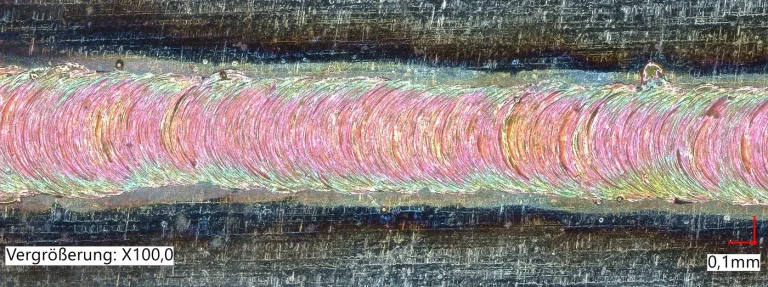
Copper welding, spatter-free
A single-mirror retrofit brought ring-core seams to an existing welding laser.
Read use case →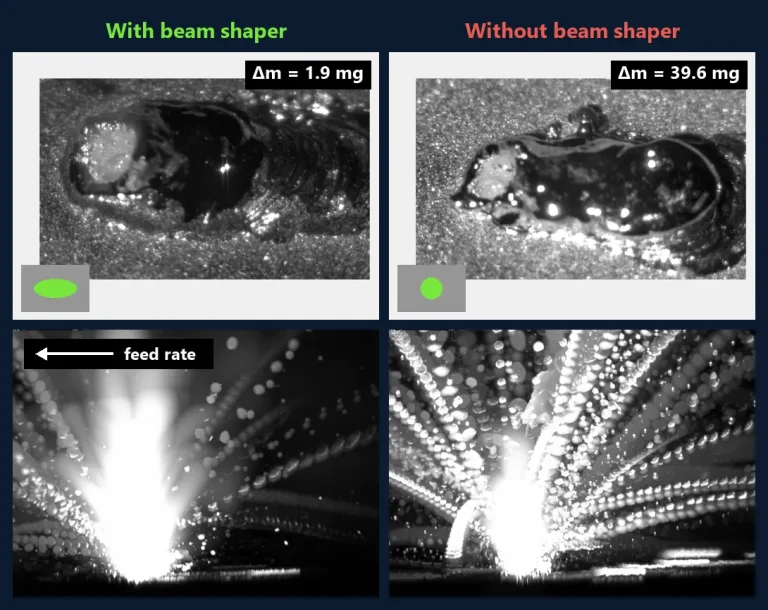
New beam shapes for laser welding
Elliptical flat-top stabilises the copper melt pool — up to 93% less spatter.
Read use case →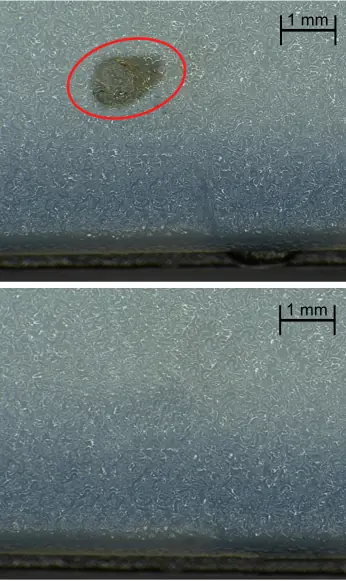
Laser welding of high-performance plastics
Plug & play beam shaping in an Evosys platform — zero rejects on complex geometries.
Read use case →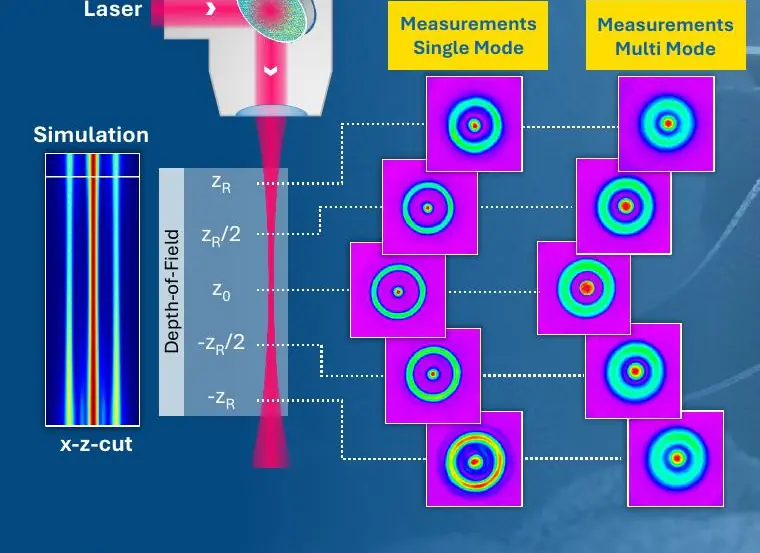
Measured, not just modelled
Independent high-power characterisation of the 3D Ring-Core with PRIMES.
Read case study →Your process, your laser: a beam shape that fits.
If defocus, spatter, or a reflective metal is capping your yield, tell us your laser and joint geometry: most retrofits are a single-mirror swap, done in under 30 minutes.
Discuss your challenge