



Skip to content
Welcome to our new website — take a look around and enjoy. Meet us at LANE 2026 in Erlangen · 21–25 September Conference details →
FAQ

Frequently asked questions

Answers to what engineers ask us most — searchable, and grouped by topic.

Customization 5

Can I choose the number of spots and the pattern?
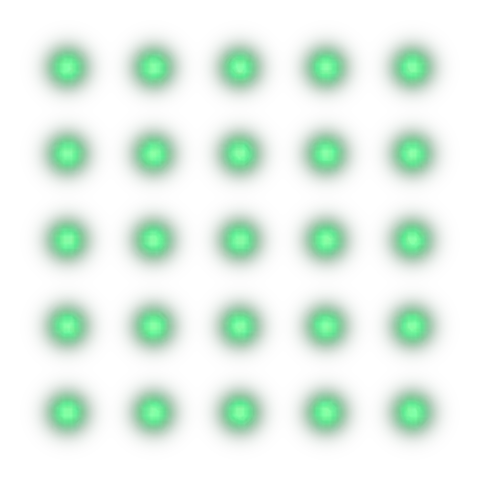
Yes — pattern, spot count and spacing are customized as standard. Tell us your target layout (a 1×N line, a 2D grid, or something else) and the pitch you need, and we design the optic around your process.

Learn more

Can I combine it with a flat-top or other shaper?
Yes — the splitter is easily combinable with other beam-shaping optics. A common combination is a flat-top shaper on the sub-beams, so each spot is both uniform and shaped.

Learn more

Can I set the ring diameter and the ring-to-core power ratio?

Yes, both are customized as standard. Tell us your target ring diameter and how you’d like power split between ring and core, and we design the optic around your process.

Learn more

What shapes and sizes can I get?
Round, square, rectangular, or custom, sized to your process, typically in the mm to cm regime. Exact spot dimensions depend on your beam and working distance; we confirm what’s achievable for your configuration.

Learn more

What size and shape can I get?
The plateau can be anywhere from 1.5× to 10× the Gaussian spot diameter, in round, square, rectangular or custom geometry. Tell us the footprint your process needs and we design the profile around it.

Learn more

Delivery & commercial 2

Does this scale to a few hundred units a year?
Yes. The optic is designed once against your application spec, then reproduced unchanged at volume. The design is a file, so reproduction is the easy part. Lead time and unit economics are confirmed per program, once the design scope is clear. We’d rather give you a date we can hold than a catalogue figure.

Learn more

What’s the delivery time?

Custom optics are typically delivered within three weeks, depending on configuration.

Fundamentals 7

Does it change the beam I already use?
No. It works with your existing Gaussian source, single- or multi-mode, reshaping that beam’s focus rather than requiring a different laser, so you keep your platform. The trade-off: as the elongation increases, the focus spot grows and peak fluence drops. Our configurator helps you find the elongation that still meets your fluence budget while gaining a far wider process window.

Learn more

How does the homogenization actually work?
We design an all-reflective, micro-structured mirror that splits your beam into many diffraction orders (its base orders) and overlaps them. With a multimode source, the many spatial modes wash out the residual structure and fill in a homogeneous plateau in the shape we designed for: round, square or rectangular.

Learn more

How is this different from a conventional top-hat?

A conventional flat-top DOE only works for a single focal plane and decays into a gaussian as soon as you defocus. The 3D Top-Hat is engineered for depth of field instead: it holds a homogenized flat-top across an extended usable range around focus (up to ±60% of the Rayleigh length), giving you a much wider, more forgiving process window in production.

Learn more

How is this different from a standard etched DOE?
Two things. It is reflective, so the beam never passes through a bulk material. No absorption path, no thermal lensing, which is what makes UV and high average power workable. And the surface profile is continuous rather than stepped into discrete phase levels, which is what the direct-write process allows. Transmissive etched DOEs are not worse across the board: they are easier to mount and can be cheaper at low power. At UV, at high average power and with ultrashort pulses, reflective is the one that holds.

Learn more

How is this different from the Top-Hat Beam Shaper?
The Top-Hat Beam Shaper is built for clean single-mode lasers and gives a precise, high-efficiency flat-top. The homogenizer is built for high-power multimode fiber lasers: it overlaps many diffraction orders so the source’s many modes average into a uniform spot. Different laser, different physics, different job.

Learn more

What’s the difference between the 2D and the 3D Top-Hat Shaper?
This 2D Top-Hat Shaper gives you free choice of size (1.5–10×) and shape (round, square, rectangular) at the highest efficiency, but it’s optimized right at the focal plane, so your process needs good alignment and an accurately placed focus. The 3D Top-Hat is EDOF-engineered to hold a round ~1.8× flat-top stable across an extended depth of focus: the right choice when your process moves through depth or you can’t hold focus exactly.

Learn more

Why does the focal plane matter so much?
A conventional flat-top is shaped for a single plane: the profile is at its best right at focus and softens as you move away from it. That’s the trade for its flexibility and efficiency. If your process can’t hold focus tightly, the depth-of-field-engineered 3D Top-Hat is the better fit.

Learn more

Integration & setup 7

How do I integrate it into an existing machine?
Mechanically, in most systems it takes the place of a turning mirror already in your collimated beam path. Optically it still has to be aligned, and the detail is under Requirements and limits. Every element ships with a manual covering the alignment procedure step by step, and we support you through the first integration. Send us your layout and we’ll confirm what, if anything, changes.

Learn more

How do I integrate it?
Recommended is a collimated beam with a focusing lens; the splitter can sit in a parallel/Z-folded, folded, or scanner (F-Theta) path. It’s insensitive to lateral alignment, though rotation is fixed by the structure. For setups without a lens, contact us for analysis.

Learn more

How do I integrate it?
Recommended is a collimated beam with a focusing lens; the shaper can sit in a parallel/Z-folded, folded, or scanner (F-Theta) path. Lateral alignment is required. For setups without a lens, contact us for analysis.

Learn more

How do I integrate it?

It’s an all-reflective optic typically at 45° angle of incidence, so in most heads it simply replaces a fold or deflection mirror — no extra track length. It can sit before a focusing lens (parallel/Z-folded), in a folded path, or ahead of a scanner and F-Theta lens. It cleans like a standard mirror.

Learn more

How do I integrate it?

We recommend a collimated beam with a focusing lens; the shaper can sit in a parallel/Z-folded, folded, or scanner (F-Theta) path. Lateral alignment is required. For setups without a lens, contact us for analysis.

Learn more

How do I integrate it?
We recommend a collimated beam with a focusing lens; the shaper can sit in a parallel/Z-folded, folded, or scanner (F-Theta) path. It’s all-reflective and works at 45°, so it often just replaces an existing fold mirror. It’s insensitive to lateral alignment, though rotation is fixed by the structure.

Learn more

How much alignment does it need?
Because the flat-top is built from overlapping orders rather than a single precise focus, it’s almost insensitive to how the beam is delivered: no fine focus positioning, no iterative alignment step. What does matter is the shaper’s orientation to the beam, which is fixed once when it goes in. We confirm the integration for your specific head.

Learn more

Laser compatibility 6

Does my beam quality (M²) matter?
Yes, and we use it to your advantage. Every shaper is optimized against your laser’s actual M² rather than an idealized beam, letting us push plateau homogeneity to the best your system can achieve. We handle M² < 1.5 as standard, and higher on request. Just send us your measured value.

Learn more

Which lasers and power levels does it support?

All of them: deep-UV to near-IR, femtosecond to continuous-wave, and low power up to 50 kW+. It works with single- or multi-mode sources. Send your wavelength, power/regime, M² and input beam and we confirm fit.

Which lasers does it work with?
Any single-mode source (M² < 1.5, higher on request), from deep-UV to near-IR, femtosecond to continuous-wave, low power up to 50 kW+. Send us your wavelength, power/regime, M² and input beam and we confirm fit.

Learn more

Which lasers is it compatible with?

A Gaussian TEM₀₀ source with M² ≤ 1.3, from CW to 300 fs pulses, at 1030–1064, 515–532 or 343–355 nm (others on request). Send us your wavelength, regime, M² and input beam diameter and we confirm fit.

Learn more

Why do you need my BPP?
The beam parameter product describes your beam’s mode content: how much light you have and how it diverges. We design the overlapping orders around your specific BPP so the result is optimized for your actual laser, not an idealized one. Two lasers of the same power but different BPP get two different designs.

Learn more

Will it work with my wavelength and laser type?
Very likely. NIR (1030 / 1064 nm), green (515 / 532 nm), blue (450 nm), UV (343 / 355 nm) and DUV (266 nm) are covered as standard, and anywhere in 266–1100 nm is available on request. Single mode through highly multi mode. The full envelope is in Which lasers it works with above. Send your exact wavelength, power and pulse regime, M² and collimated beam diameter, and we’ll confirm fit.

Learn more

Performance & specifications 8

Does the structuring lower the damage threshold?
No. Measured against the unstructured mirror from the same coating run, the structured shaper reached the same threshold: 235 mJ/cm² at 180 fs and 343 nm, S(1000)-on-1 to ISO 21254-2. Figures and conditions are in Damage thresholds above.

Learn more

How efficient is it?
Better than 90% at 1.5× the spot, and better than 95% from 2× to 10×, with less than 5% plateau non-uniformity (ISO 13694) and side modes under 1.5%. Almost all your laser power ends up in the useful profile.

Learn more

How much can it extend the depth of focus?
Up to 5× a standard Gaussian beam. The exact elongation is a design choice. Tell us your part-height variation and we set it around your process, trading spot size against depth as needed.

Learn more

How much larger is the process window, really?

Up to about 5×. In production practice a regular shaper delivers a quality flat-top only within roughly ±12.5% of the Rayleigh length; the 3D Top-Hat holds flatness >0.9 and uniformity <0.1 across ±60%. The exact figure is M²-dependent — use our interactive calculator to check it for your system.

Learn more

How small a flat-top can I get?

Down to about 1.5–1.8× the diffraction-limited spot, depending on beam quality — close to the physical resolution limit, which is what next-gen micro-machining needs.

Learn more

How uniform are the sub-beams?
We design for less than 5% intensity variation across the sub-beams, and each spot keeps the unaltered size, shape and depth of focus of your input beam. In a sample 1×4 measurement at 532 nm the spots carried 98–100% of the brightest, with the central zero order suppressed to under 1%.

Learn more

I have a 20 µm Gaussian spot. Can I get a 20 µm flat-top?
Not as a same-size, crisp-edged flat-top. The edge of a flat-top can never be perfectly sharp: its steepness is limited by your optical system and, ultimately, by the diffraction limit (the optical resolution). If the plateau is the same size as the original spot, the edges end up as wide as the spot itself and there’s essentially no flat region left. To fix that, make the flat-top comfortably larger than that edge width: enlarge the input beam or shorten the focal length, so the plateau is much wider than the diffraction-limited edge. Send us your target size and we’ll tell you the beam diameter or focal length it needs.

Learn more

Will it survive multi-kW operation?

That’s a core strength. The optic is all-reflective (a micro-structured dielectric HR coating on fused silica with >99.9% reflectivity), so it stays stable where transmissive optics drift under thermal lensing.

Reproducibility & validation 3

Can I actually reproduce the measured numbers?

Yes, the values on this page were measured on a Primes MicroSpotMonitor MSM+ and agree with theory. We confirm the numbers for your exact configuration and stay close while you validate them in your process.

Learn more

Can I actually reproduce the specifications?

Yes — that’s the point. Measured profiles match simulation and stay top-hat across ~60% of the depth of focus. We don’t ship catalogue parts with lab-only numbers; we support you through integration and stay close while you validate the profile under your real process conditions.

Learn more

Can you give me exact specifications?
Not from a catalogue: a homogenizer is designed around your beam, so the real numbers come from a feasibility check on your laser. Send us your wavelength, power, BPP (or fiber core diameter and NA) and target shape, and we’ll return achievable values for your setup.

Learn more